
Comprehensive Guide to Sample Deproteinization Kits: Techniques, Applications, and Technical Insights
Sample deproteinization is an essential step in a variety of scientific fields, including clinical diagnostics, pharmaceutical development, and environmental monitoring. The process involves removing proteins from biological samples to prevent interference in subsequent analyses. The removal of proteins ensures that more accurate results can be obtained, whether you’re measuring metabolites, hormones, or other analytes in biological samples.
What is Sample Deproteinization?
Sample deproteinization refers to the removal of proteins from a sample, particularly biological fluids like blood, plasma, serum, urine, or even environmental samples. Proteins can interfere with analytical techniques by binding to the analytes or causing equipment fouling, both of which can skew results. In many scientific and industrial applications, deproteinization is vital to ensure the accuracy of downstream tests, such as chromatography, mass spectrometry, and electrophoresis.
Deproteinization is especially important when working with complex samples like serum, which contain a variety of proteins that can mask the presence of other components. By effectively removing these proteins, the target analytes become easier to analyze and quantify.
Methods of Deproteinization
Various methods are employed for the deproteinization process. The selection of a method depends on several factors, including the sample matrix, the analytes of interest, and the resources available. Below are some of the most commonly used methods:
1. Organic Solvent Precipitation
Organic solvent precipitation is one of the most widely used methods for deproteinization. In this process, organic solvents like methanol, ethanol, or acetonitrile are added to the sample. These solvents disrupt the non-covalent bonds that stabilize proteins, causing them to precipitate out of solution.
Once the proteins have precipitated, the supernatant, which contains the target analytes, is separated and can be used for further analysis. This method is effective for many types of samples, especially in proteomics and metabolomics studies.
Advantages:
-
Simple and fast
-
Cost-effective
-
Can be used with a variety of sample types
Disadvantages:
-
Some analytes may be co-precipitated with proteins
-
Solvents must be properly removed to avoid contamination
2. Ultrafiltration
Ultrafiltration involves using a membrane with a specific molecular weight cutoff to filter out larger proteins from smaller analytes. This method is particularly useful when concentrating analytes or separating low molecular weight substances from high molecular weight proteins.
Ultrafiltration can be automated for high-throughput analysis, making it ideal for large-scale studies. The method is especially common in the pharmaceutical industry, where it is used to prepare plasma samples for drug analysis.
Advantages:
-
Effective at concentrating analytes
-
Does not require chemical reagents
-
Can be automated for high-throughput processing
Disadvantages:
-
Membrane fouling can occur, requiring frequent maintenance
-
Not effective for all sample types
3. Acid Precipitation
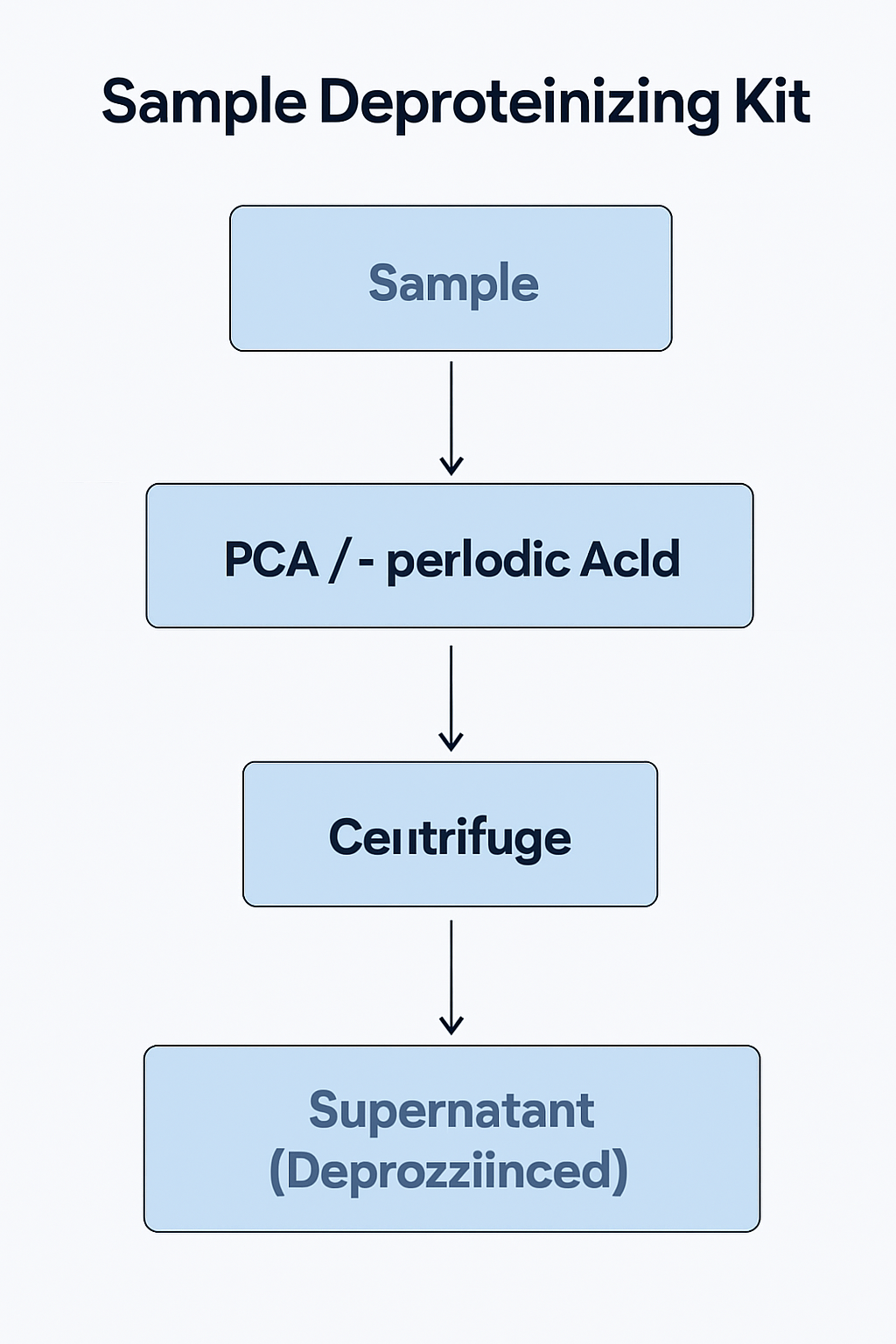
In acid precipitation, a strong acid (such as perchloric acid or trichloroacetic acid) is added to the sample to precipitate proteins. The acid causes proteins to become denatured and aggregate, forming a precipitate that can be easily separated by centrifugation.
This method is often used in clinical laboratories when analyzing serum or plasma samples for protein-bound analytes.
Advantages:
-
Simple and effective for a wide range of proteins
-
Often used in clinical and research settings
Disadvantages:
-
The acid may affect the stability of some analytes
-
pH control is necessary to prevent damage to analytes
4. Heat Denaturation
Heating samples is another straightforward method to induce protein denaturation. By applying heat, proteins lose their secondary and tertiary structure, causing them to aggregate and precipitate. This is a particularly quick method but may not be suitable for heat-sensitive analytes.
Advantages:
-
Simple and fast
-
No chemicals are required
Disadvantages:
-
Not suitable for heat-sensitive analytes
-
May result in loss of certain analytes
5. Enzymatic Deproteinization
Enzymatic deproteinization uses specific enzymes to break down proteins into smaller peptides or amino acids. This method is highly specific and can be used for selective removal of proteins from complex samples.
This method is commonly used in proteomics to digest proteins into peptides for subsequent mass spectrometry analysis.
Advantages:
-
High specificity
-
Useful for complex samples
Disadvantages:
-
Requires time and careful optimization
-
May not be suitable for all types of proteins
Applications of Sample Deproteinization
Deproteinization is an essential step in a variety of scientific applications. Some key areas where deproteinization is used include:
1. Clinical Diagnostics
In clinical diagnostics, accurate measurement of various biomarkers is crucial for disease diagnosis, monitoring, and treatment. Many tests rely on the removal of proteins from blood or plasma samples to ensure that the analytes of interest are detected without interference. For instance, in tests for glucose, cholesterol, or drug concentrations, deproteinization is used to remove the matrix proteins that could interfere with the analysis.
2. Pharmaceutical Development
Deproteinization plays a significant role in drug development and pharmacokinetic studies. By removing proteins, researchers can measure drug concentrations in biological fluids like plasma, serum, or urine without interference. This helps in understanding the pharmacodynamics and pharmacokinetics of a drug.
In addition to drug development, deproteinization is also used in bioanalytical testing and quality control to assess the stability and efficacy of drugs during development.
3. Environmental Monitoring
Deproteinization methods are used in environmental science for analyzing complex samples such as soil, water, or air. Environmental samples often contain proteins, microorganisms, and organic matter that can interfere with the detection of pollutants. By removing proteins, it becomes easier to measure trace amounts of pollutants such as heavy metals, pesticides, or industrial chemicals.
4. Food and Beverage Industry
In the food and beverage industry, deproteinization is used to analyze the composition of food products. Whether it’s for quality control, food safety testing, or research on nutritional content, removing proteins from samples can help focus on the specific analytes of interest, such as vitamins, minerals, or preservatives.
Technical Considerations When Choosing a Deproteinization Method
When choosing the right deproteinization technique, several factors should be considered:
1. Sample Type
The nature of the sample greatly affects the choice of deproteinization method. For example, plasma and serum samples may require different techniques due to their distinct protein content. Solid samples, like tissues, may need to be homogenized before deproteinization.
2. Analyte Characteristics
Some analytes, especially sensitive biomolecules, may be adversely affected by certain deproteinization methods. For example, acid precipitation or heating might degrade labile compounds. The method chosen should preserve the stability of the target analytes.
3. Throughput Requirements
For high-throughput laboratories, an automated method such as ultrafiltration may be necessary. Automation reduces manual labor and increases processing speed, making it suitable for large sample volumes.
4. Cost and Resources
While organic solvent precipitation is one of the most cost-effective methods, enzymatic deproteinization may require specialized reagents and equipment, making it more expensive. Laboratories need to consider the trade-off between cost and method performance.
Conclusion
Sample deproteinization is a critical process in analytical chemistry and various industries, including clinical diagnostics, pharmaceutical research, and environmental monitoring. By understanding the different deproteinization techniques and their applications, laboratories can select the method best suited for their specific needs. Whether it’s organic solvent precipitation, ultrafiltration, or enzymatic deproteinization, each method offers distinct advantages and can be tailored to specific analytical goals.
For more detailed guidance on deproteinization methods and their applications, check the following academic resources: