
Comprehensive Scientific Guide to Amyloid Detection in Neuroscience and Biomedical Research
Introduction: Why Amyloid Measurement Is Central to Modern Research
Amyloid ELISA Kits are essential analytical tools used for the quantitative detection of amyloid proteins and peptides in biological samples. Amyloids—particularly amyloid-β (Aβ) peptides derived from amyloid precursor protein (APP)—are extensively studied in neuroscience, neurodegeneration, aging, molecular biology, and translational biomedical research.
The molecular biology of amyloid proteins and their physiological relevance have been investigated for decades through publicly funded research programs supported by the National Institutes of Health (NIH)
https://www.nih.gov
and systematically curated by the National Center for Biotechnology Information (NCBI)
https://www.ncbi.nlm.nih.gov.
This article provides a deep, educational overview of amyloid biology, APP processing, ELISA assay principles, and laboratory research applications, positioning Amyloid ELISA Kits as foundational tools for reproducible and mechanistic studies.
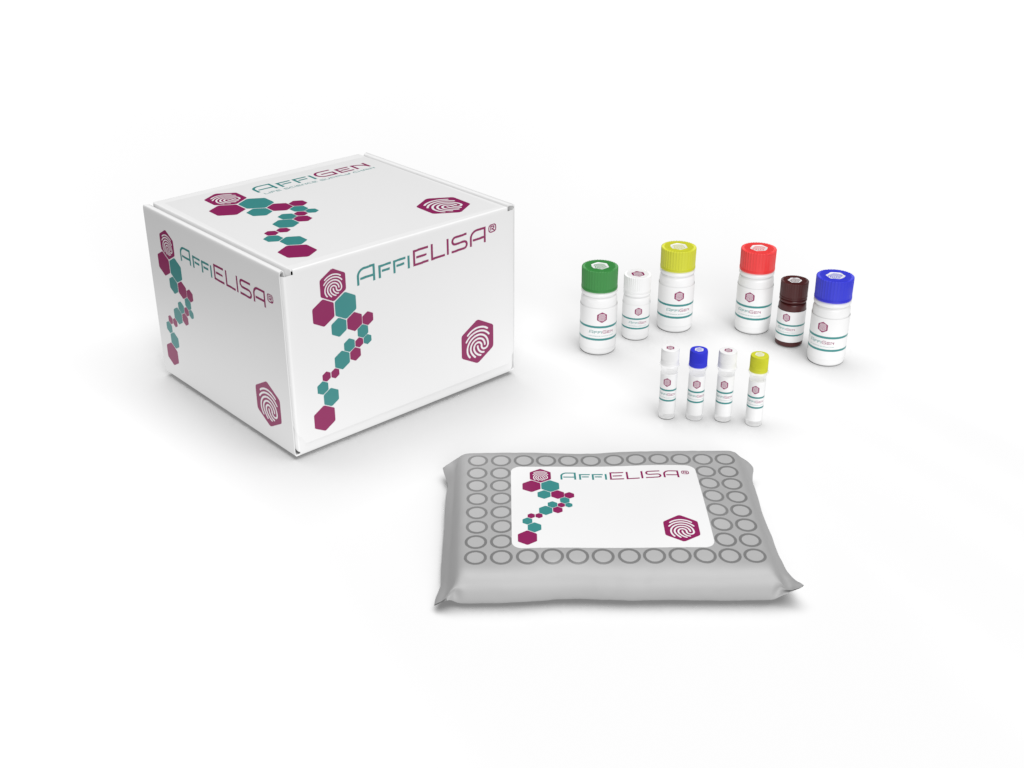
Amyloid Proteins: Molecular and Biological Background
What Are Amyloids?
Amyloids are proteins or peptides that can adopt β-sheet-rich conformations, leading to aggregation into fibrils. A detailed overview of protein misfolding and amyloid formation is available through NIH Bookshelf
https://www.ncbi.nlm.nih.gov/books
and National Library of Medicine (NLM) educational resources
https://www.nlm.nih.gov.
Among the best-characterized amyloid species are amyloid-β peptides, which are generated through the proteolytic processing of APP.
Amyloid Precursor Protein (APP)
APP is a transmembrane protein expressed in many tissues, particularly in neurons. Its structure, isoforms, and processing pathways are comprehensively described by the National Human Genome Research Institute (NHGRI)
https://www.genome.gov
and annotated in public genomic databases hosted by NCBI Gene
https://www.ncbi.nlm.nih.gov/gene.
APP Processing and Amyloid-β Generation
Proteolytic Pathways
APP is processed through two major pathways:
-
Non-amyloidogenic pathway (α-secretase cleavage)
-
Amyloidogenic pathway (β- and γ-secretase cleavage)
Educational summaries of protease biology and signaling pathways are provided by the National Institute of General Medical Sciences (NIGMS)
https://www.nigms.nih.gov
and NIH Molecular Biology primers
https://www.ncbi.nlm.nih.gov/pmc.
Amyloid-β Isoforms
Different Aβ isoforms (e.g., Aβ40, Aβ42) vary in aggregation propensity and biochemical behavior. Protein sequence and structural information can be explored via NIH-supported UniProt resources
https://www.uniprot.org
and structural data repositories such as the Protein Data Bank (PDB)
https://www.rcsb.org.
Biological Significance of Amyloid Research
Amyloid biology is a major focus area in publicly funded biomedical research programs. Extensive educational and research materials are available from:
-
National Institute on Aging (NIA)
https://www.nia.nih.gov -
National Institute of Neurological Disorders and Stroke (NINDS)
https://www.ninds.nih.gov -
National Institute of Mental Health (NIMH)
https://www.nimh.nih.gov
These resources emphasize the importance of quantitative and reproducible amyloid measurement in experimental systems.

Principle of Amyloid ELISA Kits
ELISA-Based Amyloid Quantification
Amyloid ELISA Kits utilize immunoassay principles to detect and quantify amyloid peptides with high specificity. General ELISA methodology is described in:
-
NIH Laboratory Protocols
https://www.ncbi.nlm.nih.gov/protocols -
NLM Educational Guides on Immunoassays
https://www.nlm.nih.gov/education
Depending on kit design, assays may follow sandwich or competitive ELISA formats, enabling sensitive detection in complex biological matrices.
Advantages of ELISA for Amyloid Studies
ELISA technology provides:
-
High sensitivity and specificity
-
Quantitative readouts
-
Compatibility with high-throughput screening
Comparative discussions of immunoassay technologies are available through NIH BioAssay databases
https://pubchem.ncbi.nlm.nih.gov.
Sample Types and Experimental Compatibility
Amyloid ELISA Kits are commonly validated for use with:
-
Cell culture supernatants
-
Tissue homogenates
-
Serum and plasma samples
-
Cerebrospinal fluid (CSF) in research models
Guidelines for biomarker analysis in biological fluids are discussed by the Centers for Disease Control and Prevention (CDC)
https://www.cdc.gov
and NIH biomarker research initiatives
https://www.nih.gov/research-training.
Applications in Neuroscience Research
Cellular and Molecular Neuroscience
Amyloid ELISA Kits are widely used to study:
-
APP processing in neuronal cell models
-
Amyloid secretion dynamics
-
Protease and pathway modulation
Neuroscience research frameworks are described in detail by NINDS
https://www.ninds.nih.gov
and NIH Research Matters – Brain Science
https://www.nih.gov/news-events/nih-research-matters.
Synaptic and Cellular Stress Models
Amyloid accumulation is closely linked to cellular stress responses. Mechanisms of neuronal stress are discussed by the National Institute of Environmental Health Sciences (NIEHS)
https://www.niehs.nih.gov
and NIH cellular stress publications
https://www.ncbi.nlm.nih.gov/pmc.
Aging and Protein Homeostasis Studies
Protein homeostasis (proteostasis) and aging biology are major areas of amyloid research. Educational resources are available from:
-
National Institute on Aging (NIA)
https://www.nia.nih.gov -
NIH Geroscience programs
https://www.nih.gov/research-training
Amyloid ELISA Kits support quantitative assessment of protein aggregation processes in aging models.
Translational and Preclinical Research Value
Standardized amyloid measurement tools are essential for translational science, as emphasized by the National Center for Advancing Translational Sciences (NCATS)
https://ncats.nih.gov.
Amyloid ELISA Kits enable:
-
Biomarker validation studies
-
Longitudinal protein expression monitoring
-
Cross-study data comparability

Experimental Design and Sample Handling
Best practices for protein biomarker analysis are outlined by:
-
NIH Laboratory Safety and Best Practices
https://www.nih.gov/health-information/lab-safety -
CDC Biosafety Guidelines
https://www.cdc.gov/biosafety
Careful sample handling and storage are essential to maintain amyloid integrity and assay reliability.
Educational Value and Public Research Resources
The scientific foundation of amyloid research is supported by open-access resources such as:
This transparency makes Amyloid ELISA Kits ideal for academic teaching laboratories and reproducible research environments.
Conclusion
Amyloid ELISA Kits are indispensable research tools for the quantitative study of amyloid proteins and peptides in neuroscience, aging, and molecular biology. By combining immunological specificity with robust quantitative performance, these kits support high-quality, reproducible experimental research.
Grounded in decades of publicly funded science from institutions such as the NIH, NINDS, NIA, NIGMS, and CDC, Amyloid ELISA assays provide researchers with a scientifically validated and future-ready approach to studying protein aggregation and cellular proteostasis.