
SIV p27 ELISA Assay: In-Depth Guide for Quantitative Lentiviral Research (RUO)
Accurate and reproducible monitoring of Simian Immunodeficiency Virus (SIV) replication is essential for laboratories working with nonhuman primate (NHP) models, lentiviral biology, and translational HIV-related research. The SIV p27 ELISA assay is a widely used research-use-only (RUO) immunoassay designed to quantify the p27 capsid (CA) antigen, a core structural component of SIV virions derived from the Gag polyprotein.
This long-form article provides deeper scientific context, practical laboratory guidance, and workflow-level insights to help researchers understand where and how a SIV p27 antigen capture ELISA fits into modern virology and immunology laboratories—while remaining strictly educational and free of clinical or diagnostic claims.

Biological background: Why p27 is a central marker in SIV research
The role of Gag and p27 in the SIV life cycle
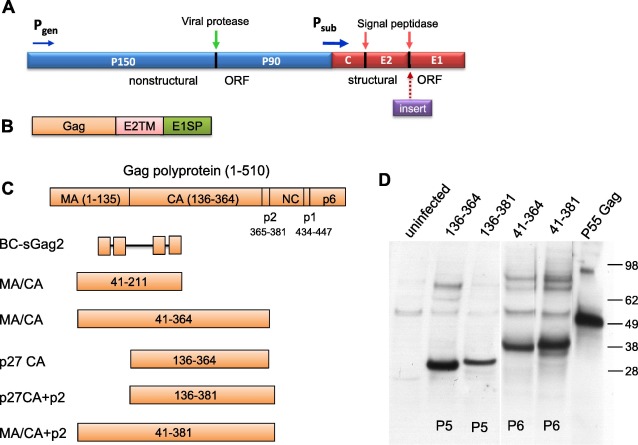
The Gag polyprotein is synthesized during viral replication and later cleaved by the viral protease into functional structural proteins. One of these cleavage products is p27, the capsid protein that forms the conical core surrounding the viral RNA genome. Because each assembled virion contains a defined amount of capsid protein, p27 concentration correlates well with particle-associated viral material in culture systems.
Educational resources describing lentiviral structure and Gag processing include:
-
NCBI Gene overview of retroviral Gag polyproteins:
https://www.ncbi.nlm.nih.gov/gene -
NCBI Taxonomy: Lentiviruses (Retroviridae):
https://www.ncbi.nlm.nih.gov/Taxonomy/Browser/wwwtax.cgi?id=11646 -
NCBI Taxonomy: Simian immunodeficiency virus:
https://www.ncbi.nlm.nih.gov/Taxonomy/Browser/wwwtax.cgi?id=11723
Principle of the SIV p27 ELISA assay (expanded explanation)
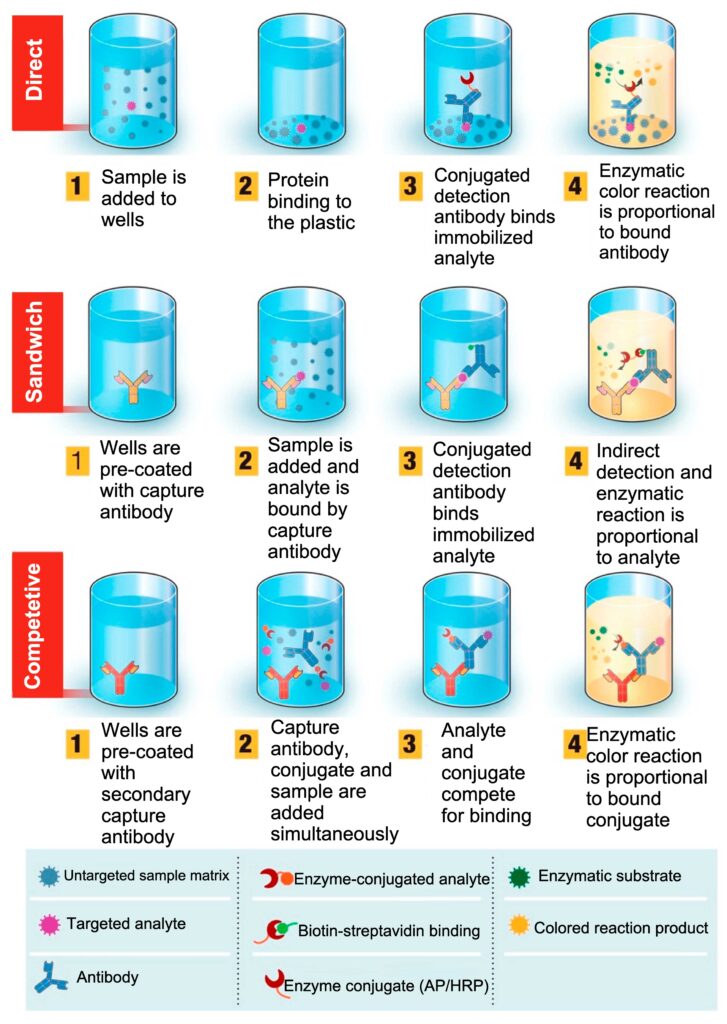
Most SIV p27 ELISA kits rely on a sandwich ELISA format, a gold-standard approach for antigen quantification in complex biological matrices.
Step-by-step assay principle
-
Capture phase
Microplate wells are pre-coated with monoclonal antibodies specific for SIV p27. When samples are added, free p27 antigen binds to these immobilized antibodies. -
Detection phase
A second p27-specific antibody (enzyme-conjugated or biotinylated) binds to a different epitope on the captured antigen. -
Signal development
Addition of a chromogenic substrate results in a colorimetric reaction proportional to the amount of bound p27. -
Quantification
Absorbance values are interpolated against a calibrated p27 standard curve, allowing concentration determination.
A general educational overview of ELISA methodology can be found here:
-
NIH / NCBI Bookshelf – Enzyme-Linked Immunosorbent Assay (ELISA):
https://www.ncbi.nlm.nih.gov/books/NBK279395/
Key laboratory applications of SIV p27 ELISA assays
Monitoring SIV replication kinetics in vitro
SIV p27 ELISA assays are commonly used to follow viral replication over time in infected cell cultures. By sampling supernatants at defined intervals, researchers can generate replication curves that reflect:
-
Early infection dynamics
-
Peak viral production
-
Effects of experimental perturbations (e.g., inhibitors, gene knockdowns)
Examples of replication monitoring using p27 measurements are discussed in NIH-hosted literature:
Viral stock characterization and normalization
In lentiviral research, consistency between experiments is critical. p27 ELISA data are often used to normalize:
-
Viral input across experimental groups
-
Batch-to-batch virus production
-
Comparative studies involving different producer cell lines
This approach mirrors the widespread use of HIV-1 p24 ELISA in HIV research, reinforcing p27 as its functional analog in SIV systems.
Support for neutralization, inhibition, and mechanistic studies
Some experimental designs use p27 antigen levels as a readout of viral growth in the presence of neutralizing antibodies, restriction factors, or small-molecule inhibitors. Historical examples include antigen-capture ELISA–based neutralization assays described in PubMed-indexed studies:
Process development and purification workflows
During virus concentration or purification steps, p27 ELISA assays can help quantify:
-
Recovery yields at each processing stage
-
Distribution of viral material across fractions
-
Losses associated with filtration or chromatography
Such measurements are valuable in method development and process optimization for research-grade virus production.
Sample types commonly analyzed
Typical RUO sample matrices include:
-
Cell culture supernatants
-
Clarified virus-containing media
-
Concentrated viral preparations
-
Purification fractions
Good laboratory practice recommendations—such as avoiding repeated freeze–thaw cycles and clarifying samples by low-speed centrifugation—are consistent with general NIH and CDC laboratory guidance:
-
CDC/NIH – Biosafety in Microbiological and Biomedical Laboratories (BMBL, 6th ed.):
https://www.cdc.gov/labs/pdf/SF__19_308133-A_BMBL6_00-BOOK-WEB-final-3.pdf -
NIH Office of Science Policy – Biosafety resources:
https://osp.od.nih.gov/policies/biosafety-and-biosecurity-policy/
Data quality and interpretation: Going beyond a single number
Importance of standard curves
Accurate p27 quantification depends on a well-constructed standard curve that spans the expected antigen concentration range. Researchers often use:
-
Duplicate or triplicate standards
-
Four- or five-parameter logistic (4PL/5PL) curve fitting
-
Internal controls to monitor inter-plate variability
Advanced discussions on antigen quantification sensitivity appear in NIH-supported publications, including ultrasensitive immunoassay formats:
Limitations to consider
While p27 ELISA is a powerful quantitative tool, it measures antigen concentration, not infectivity. For this reason, p27 data are often interpreted alongside complementary methods such as:
-
Reverse transcriptase activity assays
-
RNA-based quantification methods
-
Functional infectivity readouts (research context)
This conceptual distinction is discussed in several NIH and ASM journal articles:
Choosing a SIV p27 ELISA assay for your laboratory
When selecting a kit, research laboratories typically evaluate:
-
Antibody specificity and epitope coverage
-
Dynamic range and sensitivity
-
Reproducibility (intra- and inter-assay CVs)
-
Compatibility with common culture media
-
Availability of documentation and technical support
Clear RUO labeling and transparent performance data help ensure alignment with academic and industrial research standards.
-
SIV p27 ELISA assay
-
SIV p27 antigen capture ELISA
-
SIV Gag p27 quantification
-
Lentiviral capsid antigen ELISA
-
SIV replication monitoring assay
-
SIV virus production ELISA
-
Lentivirus research ELISA kit
Suggested meta description (copy-ready):
Educational overview of SIV p27 ELISA assays for quantitative capsid antigen measurement in lentiviral research, virus production monitoring, and in vitro replication studies (RUO).
Authoritative edu & gov learning resources (20 links)
These .edu / .gov links can remain embedded in your blog for credibility and SEO strength:
-
https://www.ncbi.nlm.nih.gov/Taxonomy/Browser/wwwtax.cgi?id=11723
-
https://www.ncbi.nlm.nih.gov/Taxonomy/Browser/wwwtax.cgi?id=11646
-
https://www.cdc.gov/labs/pdf/SF__19_308133-A_BMBL6_00-BOOK-WEB-final-3.pdf
-
https://osp.od.nih.gov/policies/biosafety-and-biosecurity-policy/
-
https://journals.asm.org/doi/10.1128/jvi.76.23.11827-11836.2002