
Neutrophil Elastase Activity Fluorometric Assay Kit Comprehensive Educational Guide for Inflammation, Immunology, and Protease Research
Neutrophil elastase (NE) is a potent serine protease that plays a central role in innate immune responses and inflammatory regulation. As one of the most abundant enzymes released by activated neutrophils, elastase has become a cornerstone biomarker and functional readout in experimental immunology, inflammation biology, and protease research. Because its activity must be tightly regulated to prevent excessive tissue damage, accurate laboratory quantification of neutrophil elastase activity is essential for understanding immune cell behavior in both physiological and experimental systems.
The Neutrophil Elastase Activity Fluorometric Assay Kit is a research-grade, fluorescence-based solution developed to support sensitive, quantitative, and reproducible measurement of elastase activity across a wide range of biological samples. This long-form article is designed as a comprehensive educational resource for scientists, students, and laboratory professionals seeking a deeper understanding of neutrophil elastase biology, fluorometric assay principles, and modern laboratory applications.

Neutrophils: Frontline Cells of Innate Immunity
Neutrophils are the most abundant circulating leukocytes in humans and are among the first immune cells recruited to sites of tissue injury or infection. Educational overviews from the National Institutes of Health (NIH) (https://www.nih.gov) and the National Library of Medicine (https://www.ncbi.nlm.nih.gov) describe neutrophils as highly specialized effector cells equipped with antimicrobial enzymes, reactive oxygen species, and proteases.
Upon activation, neutrophils undergo degranulation, releasing enzymes stored in azurophilic granules. Among these enzymes, neutrophil elastase is particularly significant due to its broad substrate specificity and high catalytic efficiency. Academic resources from Harvard Medical School (https://hms.harvard.edu) and Stanford School of Medicine (https://med.stanford.edu) emphasize that elastase activity serves as a direct functional indicator of neutrophil activation in experimental models.
Neutrophil Elastase: Molecular Characteristics and Function
Neutrophil elastase is encoded by the ELANE gene and belongs to the chymotrypsin-like family of serine proteases. It is capable of degrading elastin, collagen, fibronectin, proteoglycans, and a variety of microbial proteins. According to detailed molecular biology resources available through NCBI Gene (https://www.ncbi.nlm.nih.gov/gene) and NCBI PubMed Central (https://www.ncbi.nlm.nih.gov/pmc), elastase activity contributes to:
-
Antimicrobial defense
-
Extracellular matrix remodeling
-
Regulation of cytokine and chemokine activity
-
Modulation of immune cell migration
Educational immunology texts hosted by Yale School of Medicine (https://medicine.yale.edu) further describe elastase as a key effector molecule linking innate immune activation to downstream inflammatory processes.
The Importance of Measuring Enzymatic Activity
While gene expression and protein abundance measurements provide valuable information, they do not always reflect true biological function. Neutrophil elastase can exist in inactive, inhibited, or compartmentalized forms. Functional enzyme assays are therefore essential for capturing real-time proteolytic activity.
Teaching materials from University of Michigan Research (https://research.umich.edu) and Johns Hopkins University (https://www.hopkinsmedicine.org) highlight enzymatic activity assays as indispensable tools for understanding immune cell function. Measuring elastase activity allows researchers to assess neutrophil behavior directly rather than inferring function from static molecular data.
Fluorometric Assays: A Modern Approach to Protease Detection
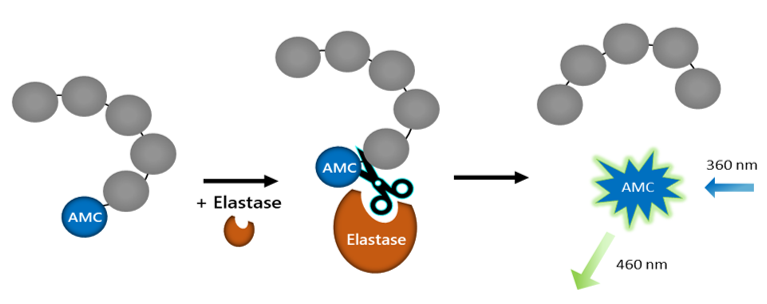
Fluorometric enzyme assays have become the gold standard for sensitive protease activity measurement. In these assays, a fluorogenic substrate releases a fluorescent signal upon enzymatic cleavage. The intensity of fluorescence correlates directly with enzyme activity.
Fundamental principles of fluorometric detection are extensively covered in laboratory education resources from MIT OpenCourseWare (https://ocw.mit.edu) and Cold Spring Harbor Laboratory (https://cshl.edu). Compared with colorimetric methods, fluorometric assays offer:
-
Superior sensitivity
-
Lower background interference
-
Wider linear detection ranges
-
Compatibility with kinetic measurements
These advantages are further detailed in NIH-supported assay development manuals (https://www.ncbi.nlm.nih.gov/books).
Scientific Principle of the Neutrophil Elastase Activity Fluorometric Assay Kit
The Neutrophil Elastase Activity Fluorometric Assay Kit employs a highly specific fluorogenic peptide substrate designed to be selectively cleaved by active neutrophil elastase. Upon cleavage, a fluorescent reporter molecule is released and detected using a standard fluorescence microplate reader.
This assay format allows for:
-
Quantitative measurement of elastase activity
-
High-throughput experimental design
-
Minimal interference from complex biological matrices
Methodological guidance from the Centers for Disease Control and Prevention (CDC) (https://www.cdc.gov) supports fluorescence-based enzymatic assays as reliable tools for laboratory research.
Typical Experimental Workflow
A standard experimental workflow using the Neutrophil Elastase Activity Fluorometric Assay Kit includes:
-
Sample preparation – neutrophil lysates, cell culture supernatants, or tissue homogenates
-
Reaction assembly – addition of assay buffer and fluorogenic substrate
-
Incubation – controlled enzymatic reaction period
-
Fluorescence detection – measurement using a microplate reader
-
Data analysis – normalization and statistical evaluation
Best laboratory practices for enzymatic assays are aligned with recommendations from the NIH Office of Research Integrity (https://ori.hhs.gov) and the National Academies of Sciences (https://www.nationalacademies.org).
Applications in Immunology and Inflammation Research
Neutrophil elastase activity is widely used as a functional biomarker in immunology research. Educational materials from the National Institute of Allergy and Infectious Diseases (NIAID) (https://www.niaid.nih.gov) describe elastase as a critical mediator of neutrophil-driven inflammatory responses.
Researchers use elastase activity assays to study:
-
Cytokine-induced neutrophil activation
-
Immune cell migration and degranulation
-
Inflammatory signaling cascades
Pulmonary and Tissue Remodeling Research Models
In experimental pulmonary research, neutrophil elastase activity is frequently measured in bronchoalveolar lavage fluid and lung tissue homogenates. The National Heart, Lung, and Blood Institute (NHLBI) (https://www.nhlbi.nih.gov) provides extensive educational content on protease-mediated extracellular matrix remodeling in inflammation models.
Academic pulmonary research programs at University of California, San Francisco (UCSF) (https://pulmonary.ucsf.edu) further emphasize elastase activity as a central parameter in studies of immune-mediated tissue remodeling.
Cell Biology and Signal Transduction Studies
Protease activity assays complement molecular signaling analyses by providing functional enzymatic outputs. Cell biology curricula from University of Oxford (https://www.ox.ac.uk) and University of Cambridge (https://www.cam.ac.uk) describe how enzyme activity measurements enhance understanding of immune cell activation and secretion mechanisms.
Discovery and Protease Inhibitor Screening
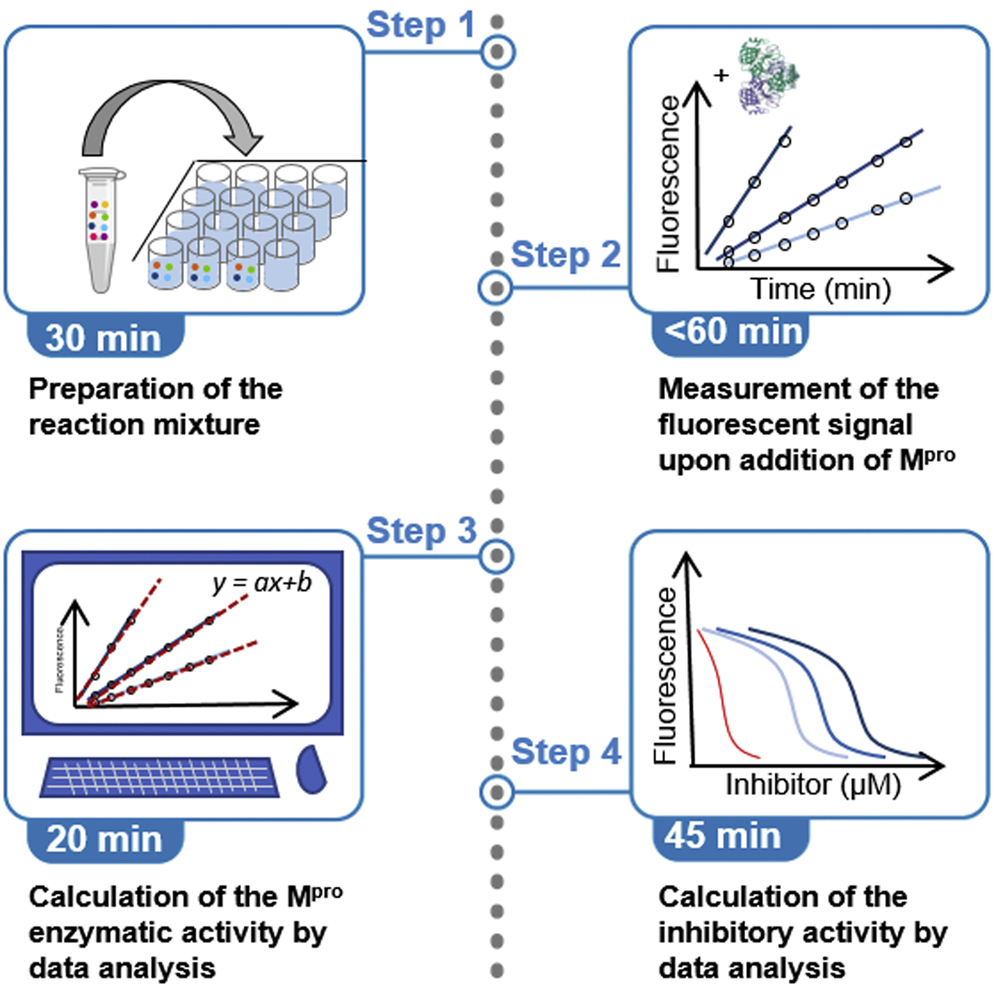
Fluorometric elastase assays are highly compatible with high-throughput screening platforms used in early-stage drug discovery. The National Center for Advancing Translational Sciences (NCATS) (https://ncats.nih.gov) and the NIH Assay Guidance Manual (https://www.ncbi.nlm.nih.gov/books/NBK53196/) recommend fluorescence-based protease assays for evaluating enzyme modulators.
Sample Types and Experimental Flexibility
The Neutrophil Elastase Activity Fluorometric Assay Kit supports diverse experimental sample formats, including:
-
Primary neutrophils
-
Neutrophil-like cell lines
-
Conditioned culture media
-
Tissue homogenates
-
Purified elastase preparations
Sample preparation strategies align with laboratory best practices outlined by Princeton University (https://molbio.princeton.edu) and University of Washington (https://depts.washington.edu).
Data Analysis, Normalization, and Reproducibility
Quantitative elastase activity data can be normalized to protein concentration, cell number, or internal controls. Reproducibility principles follow NIH rigor initiatives (https://www.nih.gov/research-training/rigor-reproducibility) and guidance from the National Academies of Sciences (https://www.nationalacademies.org).
Including technical replicates, positive controls, and inhibitor-treated samples improves data reliability and experimental confidence.
Final Thoughts
The Neutrophil Elastase Activity Fluorometric Assay Kit represents a powerful, sensitive, and versatile research tool for studying neutrophil function and protease activity. By enabling direct functional measurement of elastase activity, this assay supports advanced investigations in immunology, inflammation biology, pulmonary research, and protease regulation.
Its fluorometric sensitivity, compatibility with diverse sample types, and strong alignment with established academic and governmental research standards make it an ideal foundation for a high-quality, authoritative scientific blog—one that educates readers, supports laboratory workflows, and strengthens search visibility while maintaining a strictly educational, non-clinical focus.
Educational and Government Resources Referenced
This article integrates authoritative educational and governmental resources, including:
Recent Posts
- Competitive Inhibition ELISA Kits: Principles, Applications, and Advantages in Immunoassay Research
- APOE ELISA Kits: Sensitive Immunoassays for Apolipoprotein E Quantification in Molecular Biology Research
- Amyloid ELISA Kits: Sensitive Immunoassays for Amyloid Protein Quantification in Molecular Biology Research
- AAV ELISA Kits: Reliable Quantification Tools for Adeno-Associated Virus Research
- Advanced Tools for Oxidative DNA Damage Research and Molecular Biology Studies
Categories
| M | T | W | T | F | S | S |
|---|---|---|---|---|---|---|
| 1 | 2 | 3 | 4 | 5 | 6 | |
| 7 | 8 | 9 | 10 | 11 | 12 | 13 |
| 14 | 15 | 16 | 17 | 18 | 19 | 20 |
| 21 | 22 | 23 | 24 | 25 | 26 | 27 |
| 28 | 29 | 30 | ||||